
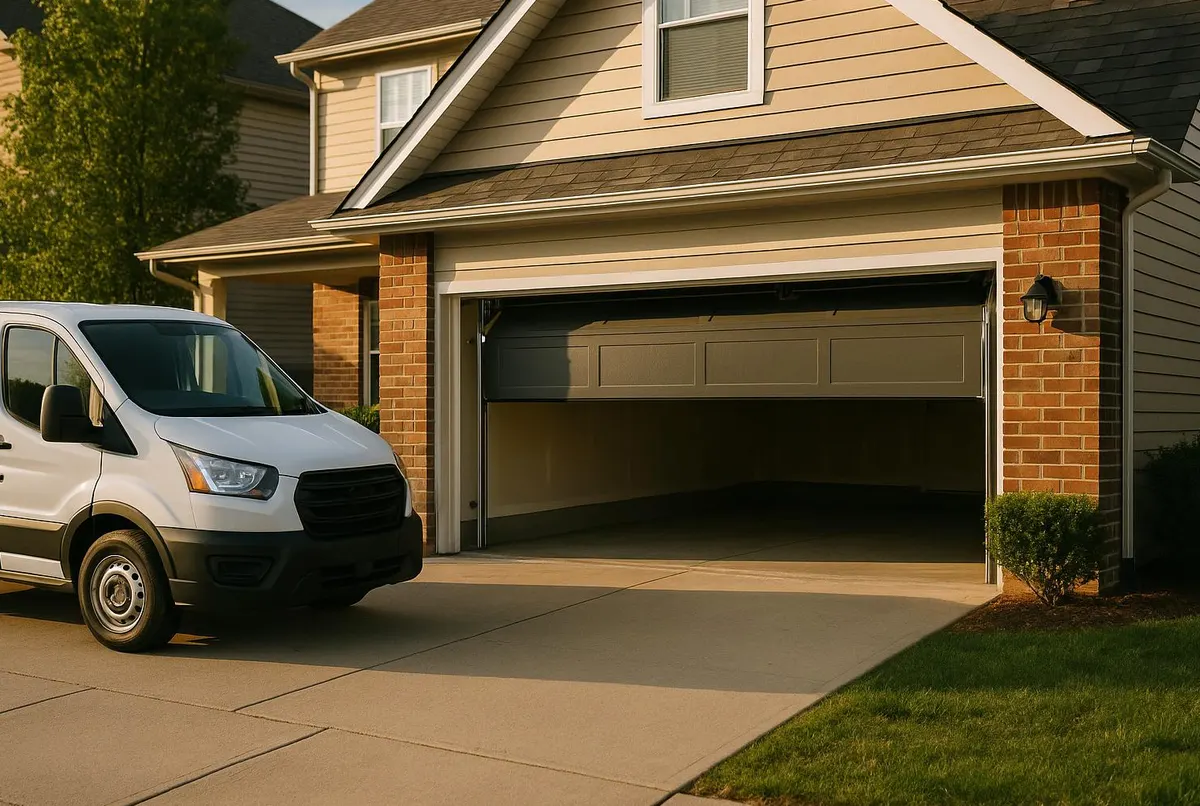
What a Technician Sees on the First Rainy Call of the Season
Every year it's the same pattern. The first real rain hits after a long dry stretch, and the service calls start coming in: a door that grinds instead of glides, an opener that reverses halfway up, or a bottom seal that's letting water pool in the garage. Nine times out of ten, the hardware was already struggling — it just took moisture to make the noise and the hesitation obvious. Summer dust, pollen, and the occasional wildfire smoke haze settle into rollers, tracks, and hinges all season long. Add the Tri-Valley's first good soak and that dry grit turns into a gritty paste that grinds down moving parts fast.
Dust Meets Moisture: Clean Before You Lubricate
If your door has been operating in the dry months without much attention, there's likely a layer of fine dust baked onto the tracks and rollers. Wiping this down before winter rain arrives matters more than people think — lubricating over dirty components just creates that gritty paste that accelerates wear. A clean, dry rag and a vacuum attachment on the tracks, followed by a silicone-based garage door lubricant on the rollers, hinges, and springs, is a simple job that prevents a lot of the grinding and sticking technicians get called out for once the rain starts.
Springs and Temperature Swings
Garage door springs handle thousands of open-and-close cycles, and metal fatigue doesn't pause for the seasons. What changes in fall and winter is the daily temperature swing — cold mornings followed by warmer afternoons cause the metal to contract and expand more than it does in a stable summer stretch. A spring that was already near the end of its life often finally lets go during this transition. The telltale signs are a door that feels heavier than usual when lifted manually, a loud bang from the garage (the spring snapping), or an opener that strains and stalls partway through its cycle. Springs are under serious tension and are not a DIY repair — this is one of the few garage door issues where calling a professional isn't optional for safety reasons.
Weatherstripping and Seals
Winter in this area means real rain, and a worn bottom seal or brittle side weatherstripping is how water, cold air, and debris end up inside the garage. Check the rubber seal along the bottom of the door for cracking, flattening, or gaps where daylight shows through. The vinyl or rubber strips along the sides and top of the door frame dry out and crack after a full dry season of sun exposure, and they're inexpensive to replace compared to dealing with water damage to stored items or a slab that stays damp all winter.
Opener Sensors and Electrical Connections
Garage door openers rely on photo-eye safety sensors near the bottom of the tracks, and these are sensitive to both dust buildup and moisture. If your door has been reversing unexpectedly or refusing to close fully, start by wiping down the sensor lenses and checking that they're properly aligned — a sensor that's been nudged out of alignment over the summer (a stored bike, a bump from a car) often shows symptoms only once humidity or glare from low winter sun interferes with the signal. It's also worth a quick visual check of any exposed wiring for cracking or rodent damage before the rainy season makes outdoor troubleshooting less pleasant.
Hardware, Hinges, and Older Homes
Many homes in this area have garage doors that have been retrofitted or reinforced for seismic bracing, and it's worth confirming that those brackets, as well as standard hinges and roller brackets, are still snug. Vibration from regular use loosens bolts over time, and a door that rattles or shows visible play at the hinges is more likely to bind or come off-track once it's doing extra work in wet, cold conditions.
A Quick Pre-Winter Checklist
- Wipe down tracks and rollers, then apply silicone-based lubricant to rollers, hinges, and springs
- Inspect bottom seal and side weatherstripping for cracks or gaps
- Test the auto-reverse feature and clean the photo-eye sensors
- Check all visible bolts, hinges, and brackets for looseness
- Listen for grinding, popping, or straining sounds during a full open-close cycle
When to Call Alamo Garage Door Experts
If your door is grinding, sagging, or the spring looks stretched or has visibly separated, it's time to call rather than troubleshoot further. Alamo Garage Door Experts handles spring replacement safely with the right tools and tension equipment, and our garage door maintenance service covers the full tune-up — tracks, rollers, hardware, and opener calibration — so the door is ready before the heavier winter rain sets in. If something fails at an inconvenient moment, our emergency service covers that too.
Don't wait for the first storm to find out what the dry season left behind. Call Alamo Garage Door Experts today to get your garage door inspected and ready for winter in Alamo, CA.